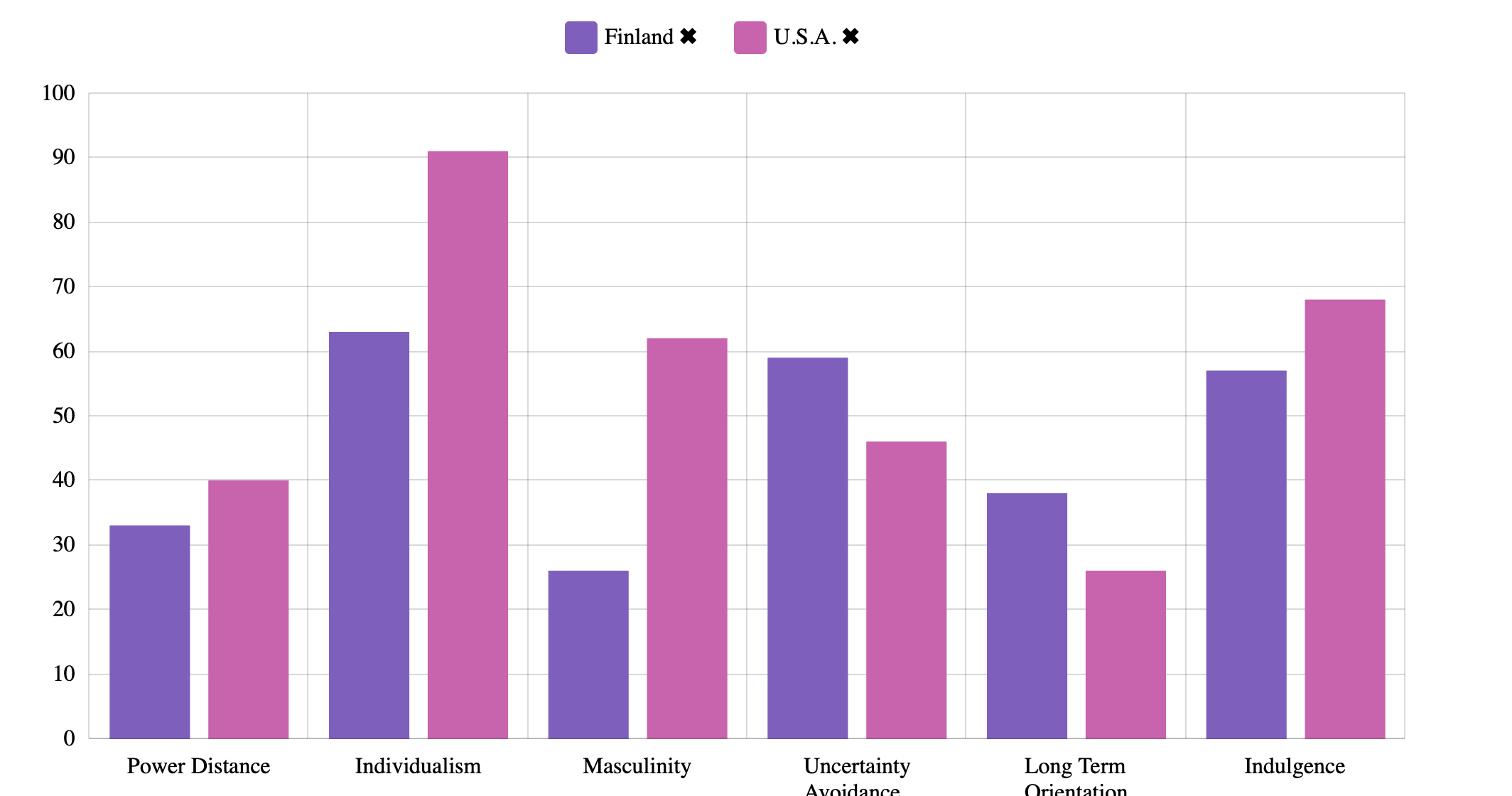
- Power Distance
- Individualism
- Motivation toward Achievement
- Uncertainty Avoidance
- Long-term Orientation
- Indulgence
Hofstede
National culture, mapped on six research dimensions.

24 September 2026
Play the audio on each section to hear the full story. Read the script under each player. Scroll as you go, and tap the screens to try the product.
AIESEC is the world's largest youth-led organization. Every year, thousands of students and young professionals cross borders for internships, volunteer projects, and teaching programs. Logistics are handled. Visas are sorted. Housing is arranged. But there is still one invisible barrier that no checklist can solve. Culture.
AIESEC × Chameleo
Global Volunteer. Global Talent. Global Teacher. Three programs. One invisible challenge: culture.
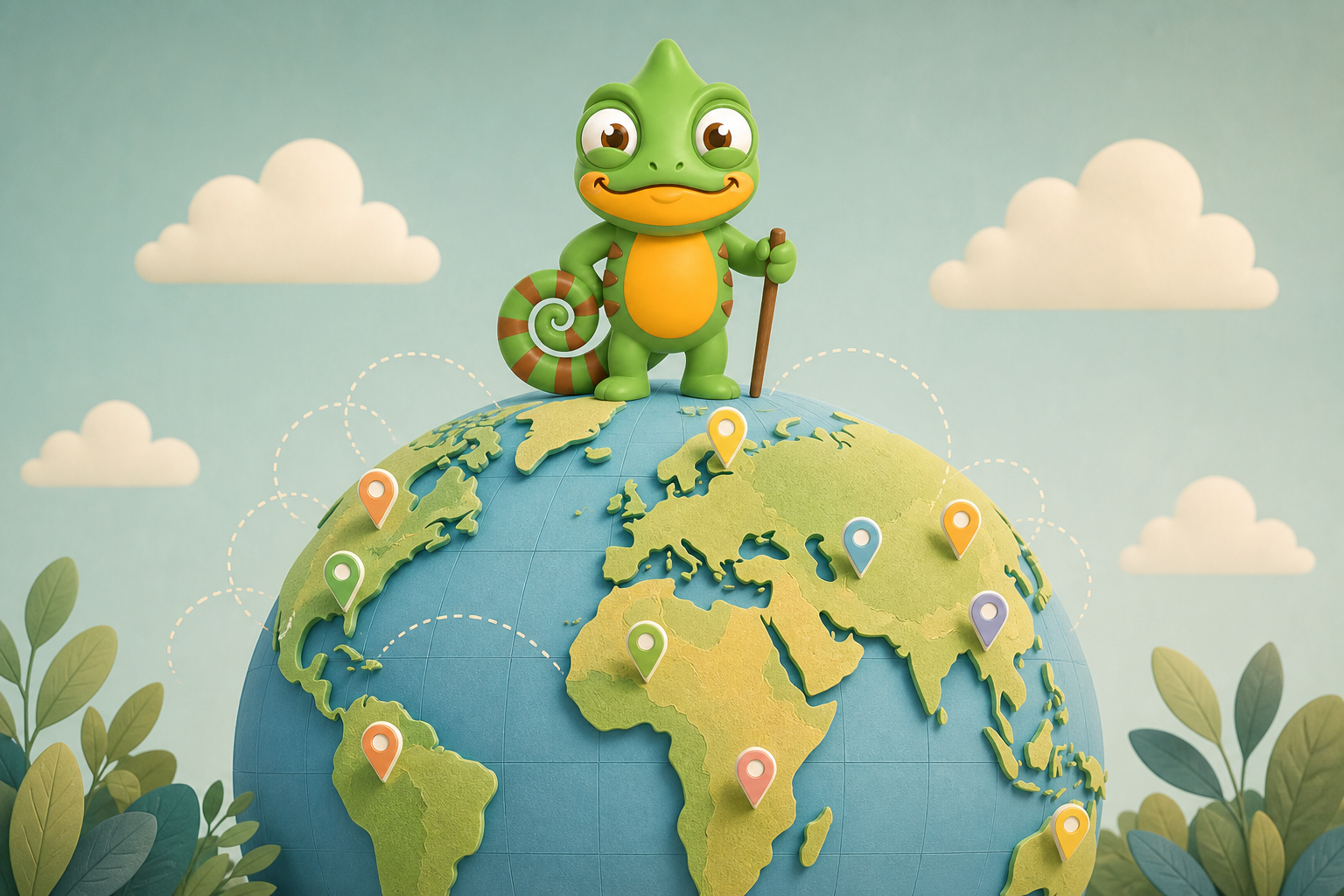
Participants arrive excited and prepared. They have the language, the motivation, the skills. But within the first few weeks, many hit an invisible wall. They misread tone. They struggle with hierarchy. They miss social cues. Small cultural gaps stack up until the experience feels harder than it should. Some quit early. Others finish but leave with mixed feelings. That hurts retention, satisfaction scores, and AIESEC's reputation with host organizations.
The invisible gap
The internship starts. The project kicks off. But small things feel off. A manager's silence is confusing. Colleagues seem distant. The tone in emails sounds harsh. What seemed like a smooth landing turns into silent frustration.

With Chameleo, participants can see at once where a cultural clash is likely and what to do about it. Look at the examples below. These are some of the groups most represented among AIESEC exchange participants worldwide.
Instant compare
Real product compare with percentages, descriptions, and every lens. Tap to flip for the biggest gap. See more for additional origins. Half workplace, half everyday personal.
Tap a card for the biggest gap. See more for the rest.
A big gap does not mean incompatibility. It is a signal to prepare. Once participants know the differences, they adapt faster and feel more confident.
Erin Meyer says: "If we go into every interaction assuming that culture doesn't matter, your default mechanism will be to view others through your own culture lens and to judge or misjudge them accordingly." The knowledge of cross-cultural psychology has existed for decades, but it has been mainly available to global corporations, MBA students, and international relations programs. Our goal is to make this knowledge as simple and accessible as a language app. We took recognized frameworks and turned them into a gamified, engaging experience. Duolingo for cultural intelligence. When young people cannot name cultural differences, stereotyping starts: Finns are cold, Indians are indirect, Germans are rigid, Brazilians are unreliable. But each person is a unique mix of cultural settings. Our job is to teach participants to recognize these patterns in themselves and others.
Not the logistics
How people show respect. How they treat time. How trust gets built. What silence means. Whether the room is flat or hierarchical. These cues decide outcomes long before anyone opens a project brief or a work task.
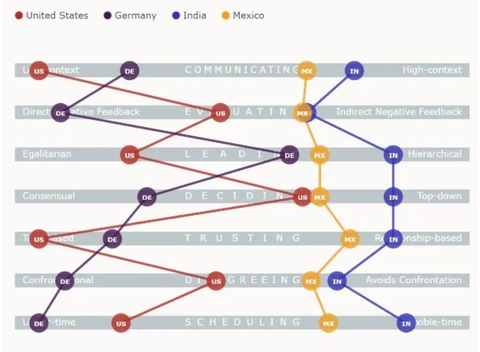
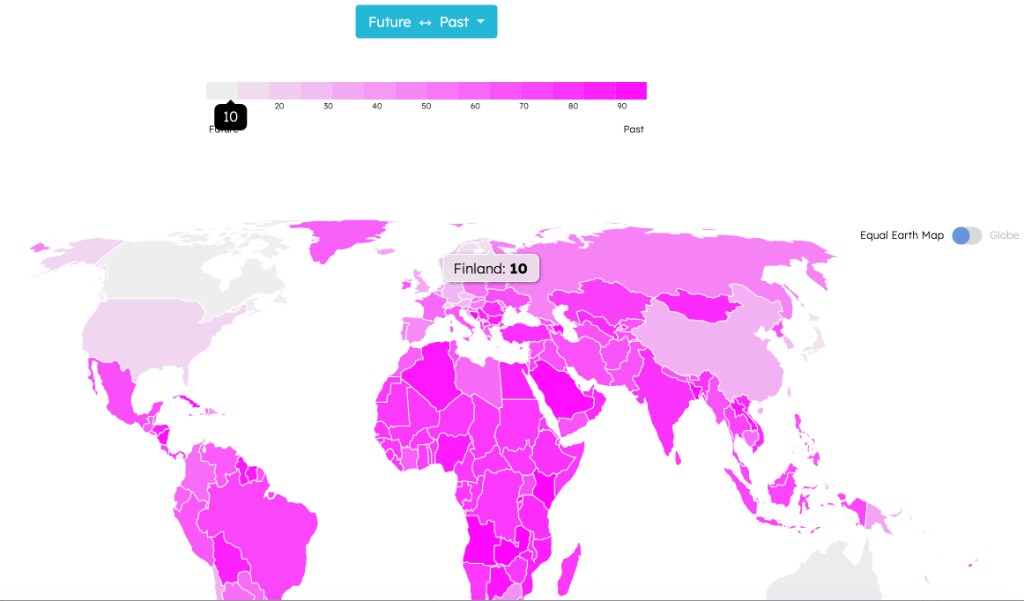
Tap through the maps below: why culture matters, then Hofstede, Lewis, Meyer, Trompenaars, and our eight lenses.
National culture, mapped on six research dimensions.
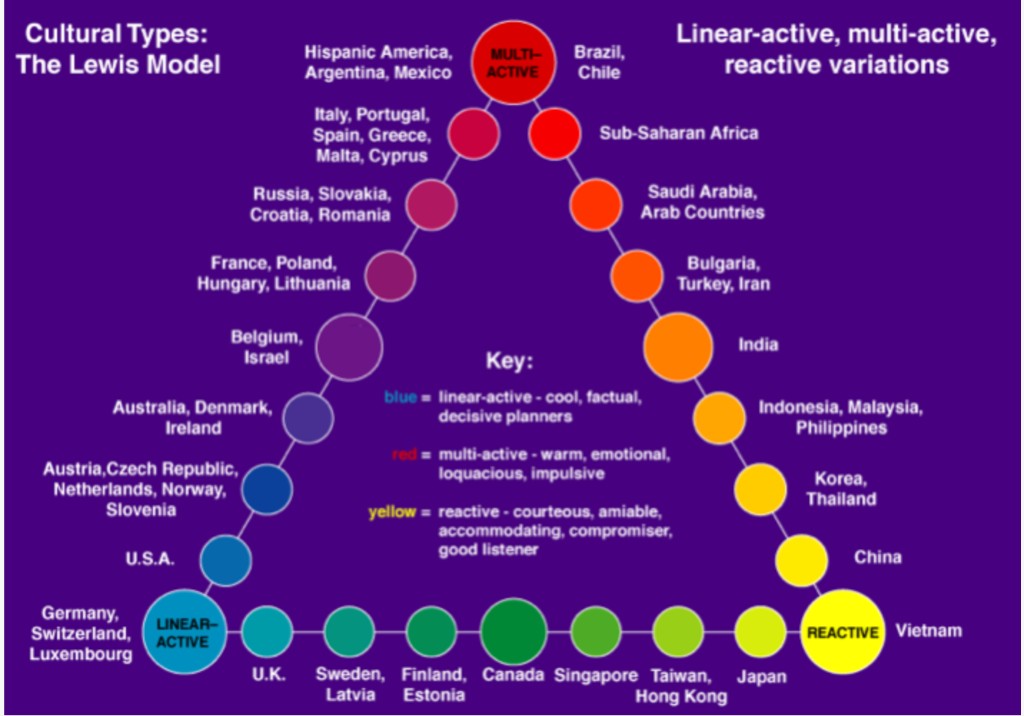
Three styles for how people plan, talk, and relate to time.
Eight practical scales for everyday cross-cultural work.
Seven dimensions for rules, people, time, and control.
Here are four exchange participants heading to Finland on different AIESEC programs. Switch each card. This is the feeling when the cultural map is missing. And this is what becomes possible when it is there.
Same program, different defaults
Switch each card between Without and With Chameleo. Flags show home culture and nearby peers with similar workplace habits.

Similar cultures
Says yes to avoid conflict. Waits for clear instructions. Struggles with flat hierarchy and direct feedback.

Similar cultures
Builds friendships first, then work. Finds Finnish silence cold. Arrives flexibly on timing.

Similar cultures
Respects hierarchy deeply. Avoids disagreeing with seniors. Expects detailed guidance from above.

Similar cultures
Relationship-building takes priority. Long greetings and personal talk before business. Expects warmth.
This works for every education level and every AIESEC program. Before they leave home, participants complete a short cultural assessment. It takes 10 minutes. They see how they build relationships, communicate, handle hierarchy, perceive time, and build trust. Not stereotypes. Their actual profile across ten cultural lenses.
Pre-departure integration
Before departure, participants get access. Assessment first: their communication profile, not their passport.
This is Chameleo's own interpretation, not an official presentation of these frameworks. The researchers named are not affiliated with Chameleo.
Your dimensions
 Say itHint it
 ScheduleSpontaneous
 SoloGroup
 RulesContext
 EqualityAuthority
 TaskRelationship
 DaringCautious
 WorkLife
 MonitoredFree to be yourself
 UnderstatedVisible
Then they immediately compare their profile with the host country and see where potential cultural gaps might appear. Once someone has done the assessment, it is easy to compare their style with a country, a colleague, or a supervisor. That can spark an important conversation. And that conversation can prevent a clash.
Compare
Suddenly the gaps are visible. Hierarchy. Time. Status. Silence. Warmth. No guessing.
You vs 🇫🇮 Finland
Based on everyday life fit
Overlap in some areas, friction in others. Worth comparing dimension by dimension.
Where they differ
The advantage is that participants can dive into each cultural dimension and immediately see what it means, how it shows up in real life, and get a practical tip on what to do about it.
Gap tips
Each big gap opens practical guidance for that lens. Here is Timing for India versus Finland.
🤝 Trust
The first work call begins
In Finland, they open the agenda: "Let's go through the points."
In India, they open with you: "How have you been? How is the family?"
Put five minutes of human time on the agenda so nobody has to guess.
One of the most valuable parts is the country-specific learning path. Short lessons that give participants a shortcut to understanding the host culture. It starts with the simplest and most practical things. For example, greetings: what do you do when you meet someone in Finland? Do you shake hands, hug, or keep distance? What is considered natural and what might feel uncomfortable? Then we move into more complex topics: personal space, cultural taboos, workplace etiquette, and many other aspects that can create misunderstandings. There are also more immersive lessons: What do people listen to in Finland? What do people talk about? Which concepts are important in Finnish culture, like Sisu? What kind of cultural heritage should you know about? Guides are ready for 104 countries. AIESEC can integrate them as a recommended or required step in pre-departure preparation.
Country roadmap
Greetings. Workplace norms. Taboos. Real situations participants meet in internships, volunteer projects, and daily life abroad.

This is where we go deeper into how people build trust, communicate, perceive hierarchy and time, create relationships, negotiate, and work together. Communication is its own module inside each country guide. There are two tracks. Personal Life: roommates, local friends, host families, daily interactions. Business: internships, supervisors, colleagues, volunteer teams.
Deep prep
Eight dimensions of how people connect, with practice built for professional and everyday moments.
Participants can quickly find the resources that matter. Language courses. Expat and student communities. Local events. Everything in one place.
On the ground
Communities, services, and local life in one place. Useful for participants building work and everyday routines at the same time.
Find your people in Finland
I'm from…
indianembassyhelsinki.gov.in
For people from India
Indians in Finland
Professionals, students, and families who help new arrivals find their footing in Helsinki.
Openexpat-finland.com
For people from India
Indian founders in Helsinki
A circle for founders from India swapping notes on permits, hiring, and first customers.
OpenLearn more about Finland
businessfinland.fi
Startup Permit
Business Finland's official path for founding teams relocating to Finland.
OpenThey also have access to cultural experts and local mentors if they need live guidance during their exchange.
After arrival
Before internship meetings, team check-ins, and cross-cultural moments. Optional expert calls when a human guide helps more than a screen.
What does AIESEC get from this partnership? First, higher retention and satisfaction. Participants who understand cultural differences adapt faster, perform better in their roles, and complete their programs with stronger outcomes. That means fewer complaints, better feedback from host organizations, and higher Net Promoter Scores. Second, differentiation. Other youth mobility organizations offer logistics and placements. AIESEC would offer cultural intelligence as a core part of the experience. That is a clear competitive advantage. Third, ready-made content. Local committees do not need to create their own cultural preparation materials. Chameleo provides 104 country guides, gamified learning, and continuous updates. Zero content development cost for AIESEC.
What AIESEC gets
Participants arrive prepared, not confused. They adapt faster, perform better, and leave with stronger satisfaction. Local committees get ready-made content without building it themselves. AIESEC stands out from other exchange organizations.
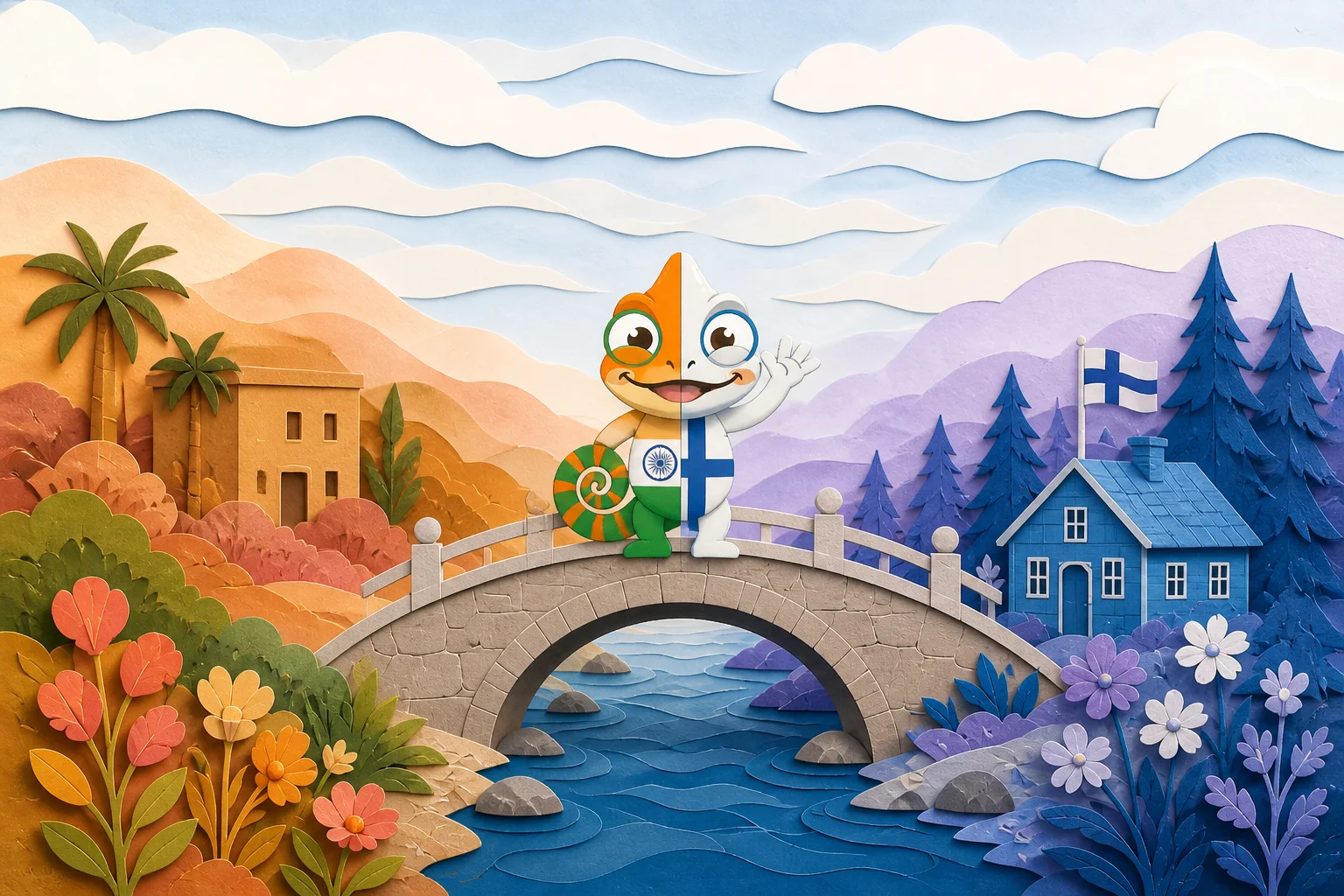
We are ready to build a dedicated track for AIESEC. A lighter, gamified path, so cultural adaptation feels easier, and so young people can thrive abroad from day one. Two partnership models are on the table. First, a B2B2C pilot with one local committee. Chameleo becomes part of the pre-departure preparation for outgoing participants. We measure completion rates, cultural confidence before and after, and feedback from host organizations. Second, white-label country guides for specific AIESEC priority destinations. Similar to our model with embassies: five hundred euros per country guide, fully customized. Either way, we are here to make cultural preparation as familiar and effective as language learning. Duolingo for cultural intelligence. Let us talk.
Pilot
Two partnership models: B2B2C pilot with one local committee (pre-departure preparation for outgoing participants), or white-label country guides for priority destinations. Measure completion rates, cultural confidence scores, and host organization feedback. We are ready to build a dedicated track for AIESEC. A lighter, gamified path, so cultural adaptation feels easier, and so young people can thrive abroad from day one.
team@chameleo.world